Safety on the Water Starts with You!
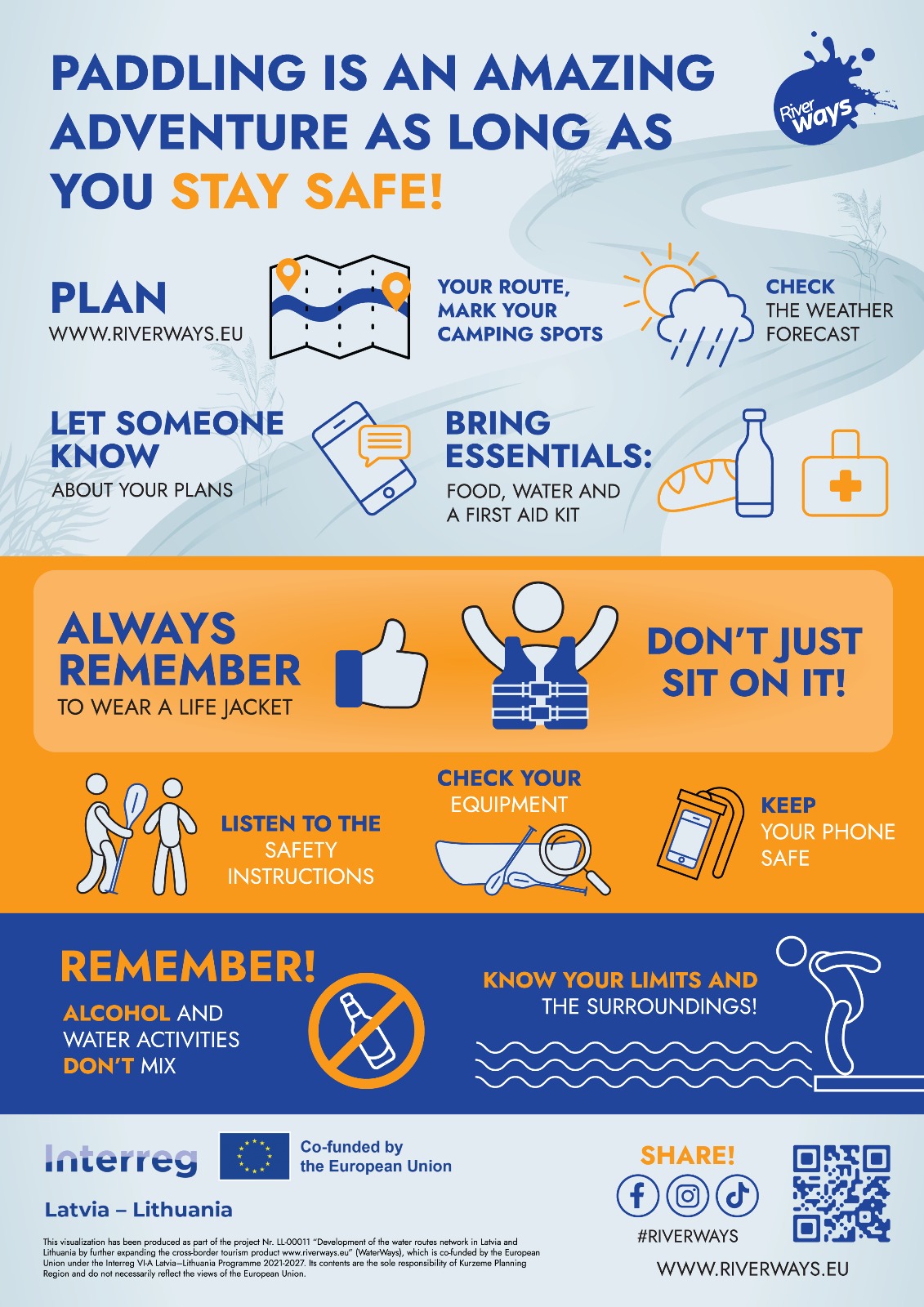
Relaxing by the lake is a wonderful way to enjoy nature, water, and tranquility. To ensure this experience is pleasant for everyone, we invite you to follow a few essential guidelines:
- Respect private property! Not all lake shores are publicly accessible. Before heading to a lake, find out whether it is located on private land and whether you need permission from landowners to access the shoreline.
- Respect rules regarding pets! While many places allow recreation with four-legged friends, some lakes have restrictions on pets being on the shore or in the water. Please follow the signs and respect other visitors!
- Pay attention to water quality and color! Before swimming, carefully observe the water: if it appears murky, greenish, has visible algae layers, or an unpleasant smell – it’s best to avoid swimming.
- Do not jump into the water — neither headfirst nor feetfirst! Jumping into unfamiliar water can be extremely dangerous – there may be rocks, tree stumps, or shallow areas. Choose safe places where you know the depth. Enter the water slowly and from the shore.
- Do not swim right after eating or when overheated from the sun, and avoid swimming in strong wind, at night, or during a storm!
- Never overestimate your swimming abilities — do not try to swim across the lake!
- Watch children closely! Children must be supervised at all times — while swimming, boating, or spending time on the shore.
- Enjoy water activities safely! When using a boat, SUP board, water bike, jet ski, or any other watercraft, always wear a life jacket!
- A watercraft must never carry more passengers than it is designed for. Do not lean over the sides, rock the boat, or stand up!
- Respect nature’s peace and quiet! Loud music, noise, or overly active entertainment can disturb both other visitors and local wildlife. Enjoy the lake calmly and respectfully.
- Follow the rule: what you bring in, you take out! Do not leave litter behind.
- Alcohol consumption is not compatible with recreation in or around water!
Safety on the water starts with you!
Relaxing by the lake is a wonderful way to enjoy nature, water, and tranquility. To ensure this experience is pleasant for everyone, we invite you to follow a few essential guidelines:
- Respect private property! Not all lake shores are publicly accessible. Before heading to a lake, find out whether it is located on private land and whether you need permission from landowners to access the shoreline.
- Respect rules regarding pets! While many places allow recreation with four-legged friends, some lakes have restrictions on pets being on the shore or in the water. Please follow the signs and respect other visitors!
- Pay attention to water quality and color! Before swimming, carefully observe the water: if it appears murky, greenish, has visible algae layers, or an unpleasant smell – it’s best to avoid swimming.
- Do not jump into the water — neither headfirst nor feetfirst! Jumping into unfamiliar water can be extremely dangerous – there may be rocks, tree stumps, or shallow areas. Choose safe places where you know the depth. Enter the water slowly and from the shore.
- Do not swim right after eating or when overheated from the sun, and avoid swimming in strong wind, at night, or during a storm!
- Never overestimate your swimming abilities — do not try to swim across the lake!
- Watch children closely! Children must be supervised at all times — while swimming, boating, or spending time on the shore.
- Enjoy water activities safely! When using a boat, SUP board, water bike, jet ski, or any other watercraft, always wear a life jacket!
- A watercraft must never carry more passengers than it is designed for. Do not lean over the sides, rock the boat, or stand up!
- Respect nature’s peace and quiet! Loud music, noise, or overly active entertainment can disturb both other visitors and local wildlife. Enjoy the lake calmly and respectfully.
- Follow the rule: what you bring in, you take out! Do not leave litter behind.
- Alcohol consumption is not compatible with recreation in or around water!
Fishing in Latvian lakes
The easiest way to purchase a fishing license is in the Mana Cope mobile app or on the website www.manacope.lv
Please note:
- Pay attention to the lake description – in some places an additional license is required, the lake description will indicate where to purchase it
- Free fishing licenses: for young people under 16 years of age, seniors over 65 years of age and persons with disabilities
- Popular types of fishing in Latvia: spinning, float fishing, ice fishing, etc.
- More about fishing opportunities with a guide service: www.balticseafishing.com
- You can check the weather conditions for recreation on the water: www.meteo.lv
- We recommend that you clarify information about the use of motorized vehicles near lakes with the relevant municipality
- Emergency phone number: 112
Fishing in Lithuanian lakes
The most convenient way to purchase a fishing permit is through the Environmental Permits Information System (ALIS) at www.alisas.lt or via the mobile app Perlas Go, where you can easily find the service section and select “Fisherman’s Card”.
Please note:
- To fish in Lithuanian lakes, you must obtain permit No. L05.1 or L05.2. The specific permit needed will be indicated in the description of each lake.
- National and regional parks, as well as other protected areas, have stricter fishing and boating regulations. In certain places (e.g., ichthyological reserves or spawning areas), fishing may be completely prohibited; the use of motorboats or electric motors may be restricted. Sometimes fishing is allowed only with a special park permit, even if you already have a valid fishing card. Before fishing in a protected area, you must check the specific rules on the park’s website or by contacting the park administration.
Fishing is allowed free of charge (without a fishing permit) for:
- Persons under 18 years of age (an ID must be presented at the fishing site);
- Persons over 65 years of age (does not apply to those receiving service or military pensions) – a pensioner’s ID must be presented at the fishing site;
- Persons with disabilities (a disability certificate must be presented at the fishing site).
On February 16, March 11, July 6, and August 15, all persons are allowed to fish free of charge in all state water bodies.
Most popular types of fishing in Lithuania:
- Spin fishing
- Float fishing
- Ice fishing
- Bottom fishing
In some cases, special requirements may apply when fishing for certain species (for example, regarding the type of bait allowed).
For more information about guided fishing tours and services: www.balticseafishing.com
Other Useful Information:
- Weather and water level forecasts: www.meteo.lt
- Information about motorboat usage on lakes can be obtained by contacting the local municipality where you plan to fish
- Emergency number: 112
- More information about fishing rules in Lithuania: https://aad.lrv.lt/lt/konsultacijos/atmintines/zvejyba/zvejybos-atmintine/
- Accommodation and leisure options by Lithuanian lakes: www.prieezero.lt
- More information about Lithuanian lakes and rivers: www.upesezerai.lt
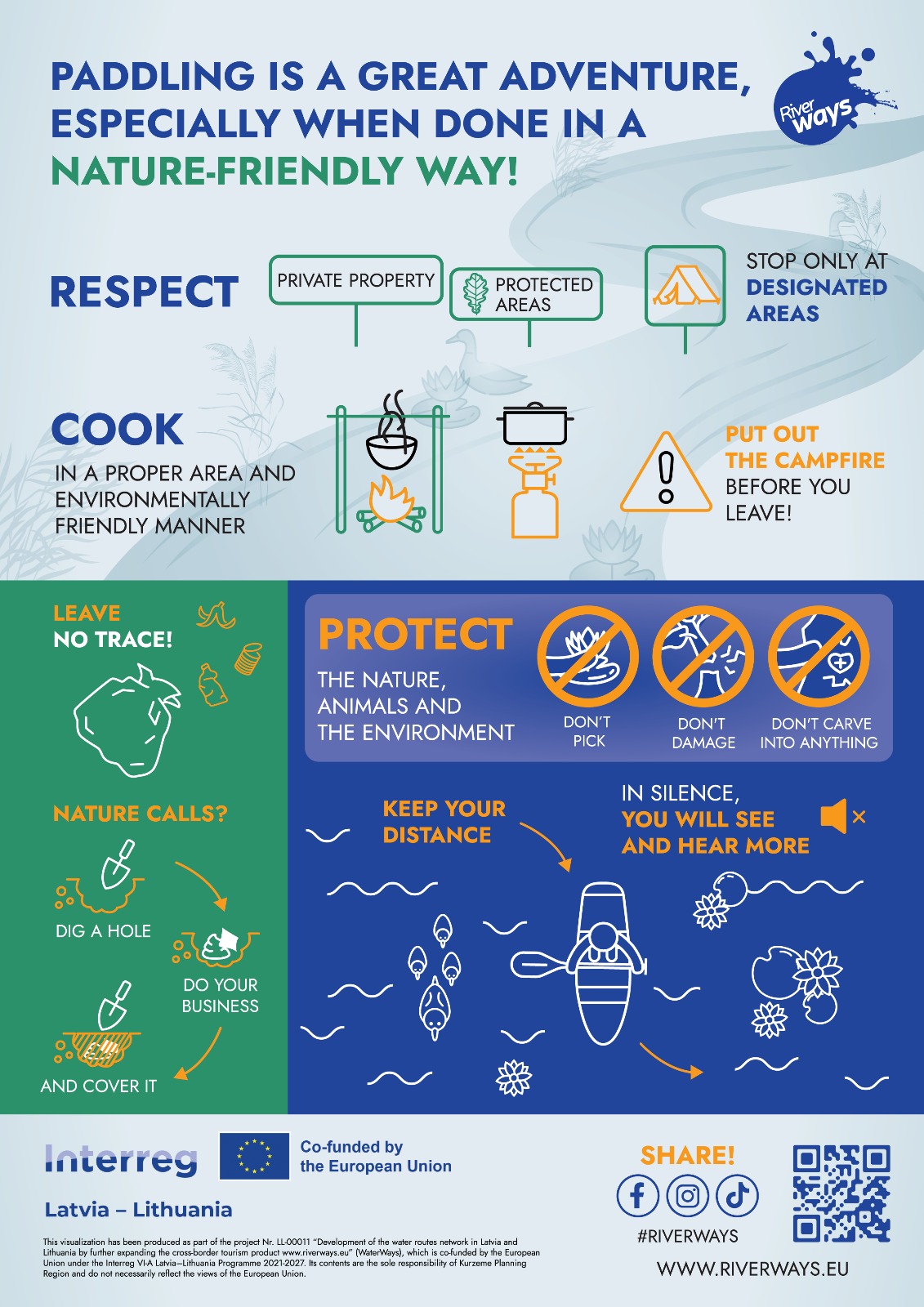
Eco-Friendly Paddling: Key Guidelines
Paddling is a wonderful way to enjoy rivers and lakes, but it also requires a responsible attitude toward nature. By following a few simple principles, we can keep aquatic ecosystems clean and healthy.
Respect Nature and the Surrounding Environment
- Stop only at designated and permitted places
- Respect private property and protected nature areas
Ensure a Safe and Clean Environment
- Cook only in designated fire pits or use a gas stove
- Before leaving, make sure the campfire is completely extinguished
- Take all waste with you — what you bring in, you take out!
Relieve Yourself in Nature Properly
- Dig a small hole, use it, and cover it back up
Protect Wildlife
- Do not pick aquatic plants, damage shoreline vegetation, or scratch rocks
- Keep a safe distance from bird nests and animals — do not disturb them
Silence Is Nature’s Language
- Avoid loud music while canoeing
- By moving quietly, you can see and hear more: birds, animals, and natural sounds
Responsible paddling helps keep our waters clean and enjoyable for everyone.
Respect natural values!